21 July 2026
Malcolm Williamson: organist and composer of organ music
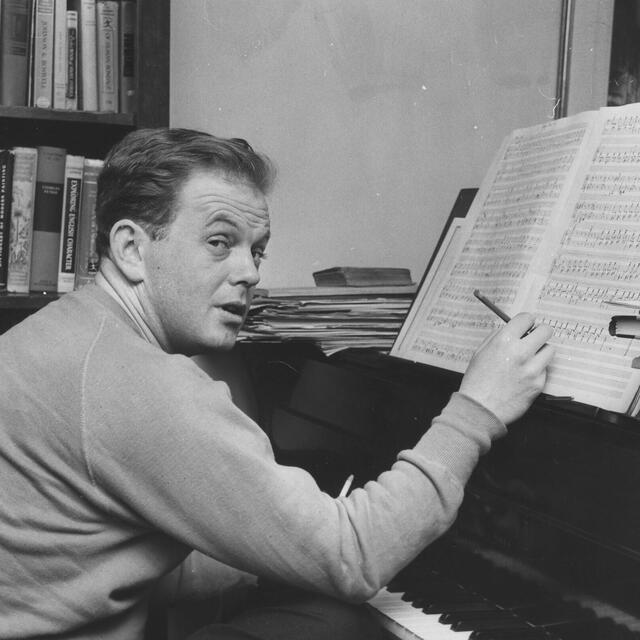 Image: Malcolm Williamson
 © Photo by Josef Weinberger Ltd.
Malcolm Williamson's organ works: "fascinating music, ripe for
rediscovery." So announces the 2014 AMC Resonate article
dedicated to the works of Australian composer, Malcolm
Williamson.
Perhaps you know the works of composer Malcolm
Williamson (1931-2003) and this article has just
prompted you to dust off some records or CD's of his music, or,
if you are like me and under 50 years old, there is a fair chance
you haven't heard of Malcolm or his music.
The man was, according to all sources, a controversial figure,
musically and socially, but brilliant enough to catch the
attention of the Monarch and international classical music
scene.
In the 1960's he was referred to as "the most commissioned
composer in Britain" and was the Master of the Queen's Music from
1975 until his death in 2003, receiving a CBE in 1976 and made an
Officer of the Order of Australia 1987.
Born and educated in Sydney, Malcolm was a child prodigy and
ended up at the Sydney Conservatorium studying composition with
Sir Eugene Goossens. He had written extensively for the ABC
Orchestras and musical forces of all sizes and types, before he
was summoned to London for the biggest role of his life.
When you play or listen to his work, there is a fierce
independence underpinned by a solid technique. And while it seems
'of its time', the 1950's and 60's avant garde, you still get a
glimpse and appreciation of the intellectual prowess that Malcolm
would have needed to back up his compositions to critics and his
peers.
Moving to London in 1975 proved a double-edged sword. Malcolm
continued to be prolific, admired and commissioned, but slowly
became excluded from major Royal events, rumoured to have fallen
out of favour with the Royal Family. When he died in 2003, the
Master of the Queen's Music was relatively unknown.
Since then, his music has rarely been heard on our radios and in
concert programs. This is a great shame, especially given his
popularity and fame when he was alive. Also, some of it is
beautiful. It's tonal and easy to listen to.
Malcolm was a colourful character and his personal life is well
documented. He was openly gay at a time when such things weren't
necessarily accepted, and was famous for wearing a Gay Rights
badge to garden parties in the presence of Her Majesty Queen
Elizabeth II.
Douglas Lawrence AM recalls Malcolm as someone who was personable
with a great depth of knowledge and feeling for music:
"We stopped once for a conversation on Princess Bridge just near
Flinders Street Station and ended up talking for an hour. There
was no bias in his way of the thinking and he epitomised the
Aussie larrikin" recalls Douglas.
"I learnt his Organ Concerto [Completed in 1961 and dedicated to
Sir Adrian Boult.] His music is technically very difficult, but
can be rewarding for the listeners and the performers. He obvious
had something to say as a composer and it was a great achievement
to be appointed Master of the Queens Music."
The sleeve to his 1984 biography, Malcolm Williamson: A
mischievous music by Anthony Meredith and Paul Harris describes
him as "an outspoken opponent of pretension, bigotry and
aggression", as well as being deeply religious and generous. On
the flip side, he could be outrageous and impossible.
And in my humble opinion, an Australian thrust into British high
society and the public eye in the 1960's was always going to
ruffle feathers.
He wrote extensively for organ, both solo and in many
combinations, as well as with choirs and orchestras. As an
organist himself, Malcolm writes with a finely attuned sense of
the instrument, and his outputs includes works based on
well-known plainchants, secular works - including Epitaphs
for Edith Sitwell (a close personal friend of Malcolm's) and
Elegy - JFK, both are very atmospheric - as well as
other works on sacred themes, including a Mass of a Medieval
Saint (first performed at St Thomas' Fifth Avenue), and I
even noted 19 pieces of incidental music for a production of a
morality play!
Lovers of ballet may be interested that Malcolm wrote the score
for the famous work inspired and depicting the lyrebird from The
Australian Ballet's 1964 production The Display which
premiered at the Adelaide Festival for Robert Helpmann
(apparently inspired in part by Katherine Hepburn).
The job of collecting and preserving Malcolm's legacy including
published works, original scores and recordings sits with Josef
Weinberger publishing firm which is based in the UK, more
specifically, Lewis Mitchell, who is himself Australian, and
reckons that now is the perfect time to bring Malcolm's music
back to life.
Given the personality that shines in every bar of his
compositions, Malcolm must have been a very entertaining,
erudite, educated and informed dinner guest. Vale.
If
you have any stories about Malcolm, please contact Organ
Australia magazine by emailing editor@organaustralia.org.au. They are keen to
publish them in their next edition and
share with Malcom's agent who is working towards a
revival of some of the large-scale compositions of this
largely
forgotten composer.
© Australian Music Centre (2026) — Permission must be obtained from the AMC if you wish to reproduce this article either online or in print.
Subjects discussed by this article:
Daniel Brace is the President of the Organ Music Society of Victoria and Ambassador for Classikon. This article is reproduced with the permission of the author and was published in Organ Australia Magazine (edition 2, 2026).



Comments
Be the first to share add your thoughts and opinions in response to this article.
You must login to post a comment.