12 October 2026
Improvisation and Leadership
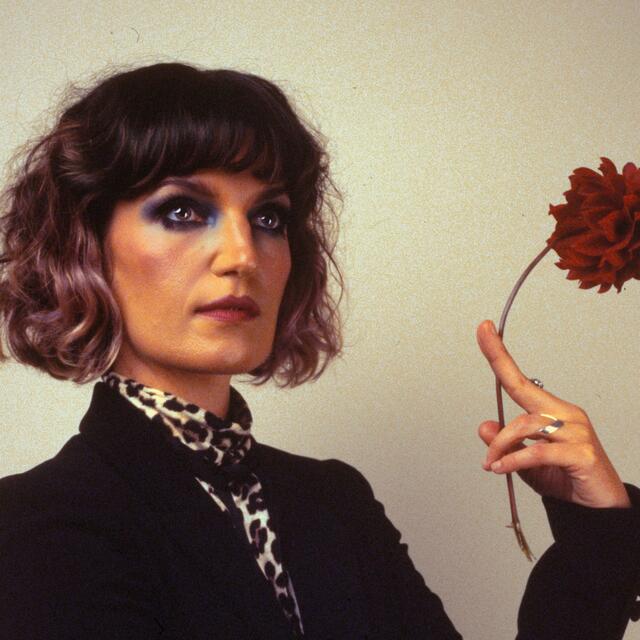 Image: Xani Kolac
 © Photo by Oli Sansom
It wasn't until I was in Year 10 that I had a music teacher who
encouraged my love of improvising. Before that, classical bow
holds and bar lines were my constant compass: I was a violinist
and so "that meant a few things", my violin teachers would say.
Notably, it meant sticking to the path well-trodden, and playing
only the notes on the page. Anything else would be detrimental to
my technique, my reputation and my future career in music.
But I wanted to go off-road. I wanted to be an improviser.
Improvising has been my greatest love since picking up the violin
at age six: while trying to work out how to play songs I heard on
the radio; trying to imitate Carlos Santana's electric guitar
solos on CD, or playing out loud the made-up songs in my head.
But improvisation isn't part of classical music pedagogy for
violinists of our time - which is a great shame and a great loss.
And I definitely wasn't given repertoire, space, or encouragement
to do it.
But I did it anyway. And so it made sense that when bestowed with
the great honour and responsibility of being the Melbourne international Jazz
Festival Take Note Leader this year, I wanted to draw on what
improvisation has taught me about leadership, and let it resonate
through my new work KOŁACZ, and in my workshops with high school
students around the state.
I have learnt the art of improvising by listening - to
recordings, to live performers, and especially to my colleagues
and collaborators. Teachers belittled and bullied me, but my
peers shared their knowledge. And after a particularly tough day
in my first year at uni (when a lecturer told me, in front of the
whole class, that "everything I was playing was bullshit"), my
friend and I nutted out a harmonic analysis on the train ride
home. This kind of peer-to-peer-learning mirrors the experience
of collective improvisation, and involves listening, trust,
letting go, and making offers. And in my opinion, is a genuinely
valuable model for meaningful leadership. The opposite is what I
experienced in my jazz/improvisation course. My lecturers sowed
seeds of doubt, which lead to a lack of confidence. And doubt is
a tricky thing to navigate as an improviser because you need
courage and trust in yourself to make a sound, to make a move, to
make an offer. So I turned to my peers to learn, to share and to
grow.
This year I have delivered improvisation and music technology
workshops for high school students across the state. Often the
students fear improvisation - especially students learning
orchestral stringed instruments - so my workshops are about
courage, games, play, and how to trust themselves in a musical
context. I have recently been developing a compositional process
that blends structure (notated motifs, unison melodies, specific
modes), with freedom (improvisation, open-ended arrangements),
and so I have been using this process with students to encourage
bravery and trust. We learn some structured notated sections as a
group, and then I break students off into trios and quartets to
come up with their own arrangements that must incorporate
improvisation. This process is about passing leadership on to
them.
In Year 10, my music teacher gave me a CD: Astor Piazzolla's 'The
Central Park Album'. He was very passionate about Piazzolla's
music and transcribed all the parts for a school ensemble. I
became obsessed with Piazzolla's music and desperately wanted to
play in that ensemble. I auditioned and made the cut. My teacher
transcribed and then notated Piazzolla's bandoneon parts for our
ensemble to play; but each recording I listened to, live or
otherwise, demonstrated just how improvised these melodies were.
I remember one day in rehearsal, my teacher got teary, moved as I
took liberties, embellishing and improvising the melodies based
on my focused study of Piazzolla's own improvisatory style. My
music teacher encouraged me to explore, and to develop my own
unique improvisatory voice. He gave me the encouragement and the
tools, then trusted me to ultimately take the lead.
At the high school workshops, the students get up and present
what they've come up with at the end of the session. They've been
presented with new concepts and challenges, and been given barely
enough time to complete the task, and yet they all get up and
perform. And it's a wonderful thing to witness: trust in
themselves, trust in each other, playfulness, a letting go of
mistakes or bung notes, and the passing around of leadership. It
has greatly influenced how I've approached my Melbourne
International Jazz Festival Take Note commission.
My new work KOŁACZ brings together the compositional system and
processes that I have been developing over the past few years
which blends structure with freedom. I am influenced by
Piazzolla's improvised and embellished melodies, as well as his
rejection of traditional genre conventions; I am influenced by
the grandeur and epic-ness of Vangelis and Morricone; and I am
always bringing my love of my first jazz violin influences:
Stephane Grappelli, Stuff Smith and Regina Carter. But I have
also made peace with my earliest beginnings in violin, drawing
upon Chopin and classical music harmony that will forever be
imprinted in my fingers and my bow hold. And I am inspired by the
work I have done with high school students across this state. It
has greatly influenced how I have gone into rehearsals with the
imaginative and inventive musical collaborators of my ensemble.
My compositions are maps. And now improvisation is my compass.
And as the leader of this project, my hope is that we will all
veer off road.
I've been working with a dramaturg to make KOŁACZ. Together we
have asked questions around form, shape and meaning. Our sessions
brought to light the driving question behind this work: "where do
I belong" (amidst a life and career of never quite fitting in
anywhere). As such, form and structure become meandering,
searching shapes; and my notated compositions became a mixture of
directions, instructions, and a kind of
choose-your-own-adventure.
It is a magical moment taking new pieces into a rehearsal room.
Especially given how much room for improvisation and performer
agency exists across my 'maps'. Notes on a stave come to life,
harmonic progressions tell a different story, and open improvised
sections surprise and delight. I have a vision for this work, and
I am leading this ensemble, but I trust my collaborators. And
that trust gives the work a sense of freedom and alive-ness. My
hope is that each time we perform this work, we arrive at the end
having been surprised, challenged, and connected.
Studying improvisation has taught me that the more I develop my
musical language - phrasing, tension, release, rhythm - the more
devices I have when making sounds and offers in an improvised
ensemble setting. The same goes for leadership. However, there
are hits, and there are misses. And even though taking a wrong
turn can lead to growth (or to somewhere new and exciting),
mistakes can feel painful. So as a leader, I try to engineer
off-ramps for when they're needed, so that the trust flows both
ways.
At the start of the high school workshops I ask everyone to raise
their hand if improvisation scares them. Most students put their
hands up. By the end of the workshop, students are using
improvisation to glue together a quickly prepared live
performance in front of their peers. Improvising becomes a
necessity - almost second nature - and collective. It is
inspiring to watch the students guiding and helping each other.
Leadership can be setting parameters. Listening. Sharing
knowledge. Making an offer. Responding. Changing direction.
Allowing somebody else to call the next section. Knowing when to
bring everyone back together.
And like improvisation, leadership is being up for a road trip to
somewhere new.
Hear KOŁACZ at Melbourne International Jazz Festival on
Saturday 17 October 2026.
Head to melbournejazz.com for more
details.
© Australian Music Centre (2026) — Permission must be obtained from the AMC if you wish to reproduce this article either online or in print.
Xani Kolac is a violinist, composer, and improviser redefining what the electric violin can do in contemporary and improvised music.



Comments
Be the first to share add your thoughts and opinions in response to this article.
You must login to post a comment.