11 November 2026
Beyond a Bio: Constantine Koukias
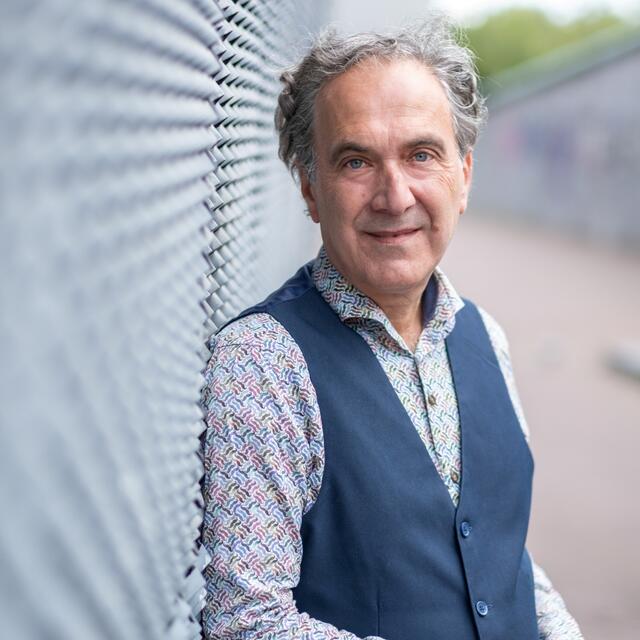 Image: Constantine Koukias
© Photo by S Blanchard.
Constantine
Koukias is a
Greek-Australian composer, creative
director and producer based in Amsterdam. His work encompasses
modern opera, music theatre, film, installation
and immersive
spatial-sound performance, often bringing ancient Greek sources
into dialogue with urgent social and political concerns.
Co-founder of IHOS Music Theatre and Opera, he has created
major works including Days and Nights with
Christ,
MIKROVION, The Divine Kiss, The Barbarians (watch excerpts
here),
A Deep Black
Sleep and
To Traverse
Water. Guided by a commitment
to social justice, human dignity
and unheard
stories, Koukias
creates
distinctive, emotionally charged works that unite music, voice,
image, architecture and technology for stage and screen.
Now
let's dive beyond his bio to find out more about Koukias'
creative process.
How would you describe your music to someone hearing it for the first time?
My music is often theatrical, immersive and shaped by ritual. It brings together voices, instruments, electronics, space and silence, drawing on ancient texts and contemporary experience. I want sound to feel physical - something that surrounds the listener and opens an imaginative, emotional world.
How does a new work usually begin for you?
Usually with an image, a line of text, a voice or an unresolved question. I first look for the work's emotional centre: its tension, landscape and sense of time. The notes come later, once I understand what the piece needs to reveal.
What ideas or sounds are inspiring you right now?
I am drawn to breath, vocal grain, resonance, very low frequencies and sounds that seem to emerge from silence. Ancient Greek drama remains a deep source, as does the possibility of placing sound in motion allowing it to move through a space and alter our sense of presence.
Can you tell us about a recent project or work?
Recently I have been developing VAST, a spatial-sound performance project in which live performers and electronics inhabit a multi-speaker environment. It treats sound as architecture: music moves around, above and through the audience, making listening a physical and communal experience rather than a passive one.
What do you hope listeners experience in your music?
I hope listeners enter a heightened state of attention, perhaps moved, unsettled, consoled or simply surprised. I do not want to prescribe a single meaning. The most rewarding response is when someone feels they have encountered something deeply personal, yet difficult to put into words.
Where or how do you work best?
I compose best in a quiet studio, often late at night, when there is room for sustained listening. But ideas rarely arrive only at the desk. Walking, travelling, visiting a museum or theatre, and being in unfamiliar places are equally important parts of the work.
What's something people might not expect about your creative process?
My process is slower and more collaborative than people might expect. Before composing, I spend time listening, reading, researching, speaking with performers and imagining the acoustic and visual world of a work. The score is only one element within a larger dramatic and spatial process.
What is one Australian work that has had an impact on you and why?
Peter Sculthorpe's Earth Cry has stayed with me for its spare, elemental sound-world and its powerful sense of place. It shows how music can be rooted in a particular landscape and cultural imagination, while still speaking with clarity and emotional force to listeners elsewhere.
What excites you about Australian art music right now?
Its plurality. Australian composers are working across cultures, forms and technologies with real confidence between concert music, opera, installation, First Nations practice, experimental theatre and sound art. That openness, and the willingness to make work outside established categories, feels particularly energising.
What's next for you?
I am continuing to develop new spatial and interdisciplinary works, including projects that bring composition into dialogue with theatre, moving image and architecture. I am especially interested in creating immersive situations where audiences do not simply hear music, but find themselves physically inside its unfolding world.
Is there anything else you'd like to add?
I see composing as an act of attention: to human voices, landscape, memory, language and silence. Working between Australia and Europe has been central to my life, and I remain grateful for the artists, audiences and organisations willing to support adventurous new work.
© Australian Music Centre (2026) — Permission must be obtained from the AMC if you wish to reproduce this article either online or in print.
Subjects discussed by this article:
- Constantine Koukias (Interviewee)
Beyond a Bio is the AMC's interview series shining a spotlight on composers and creators, giving audiences an insight into their creative process, current work and the art music community in general.



Comments
Be the first to share add your thoughts and opinions in response to this article.
You must login to post a comment.